November 17, 2026 · 3 min read
Pronunciation scoring, now in Danish, Norwegian, Russian and Turkish
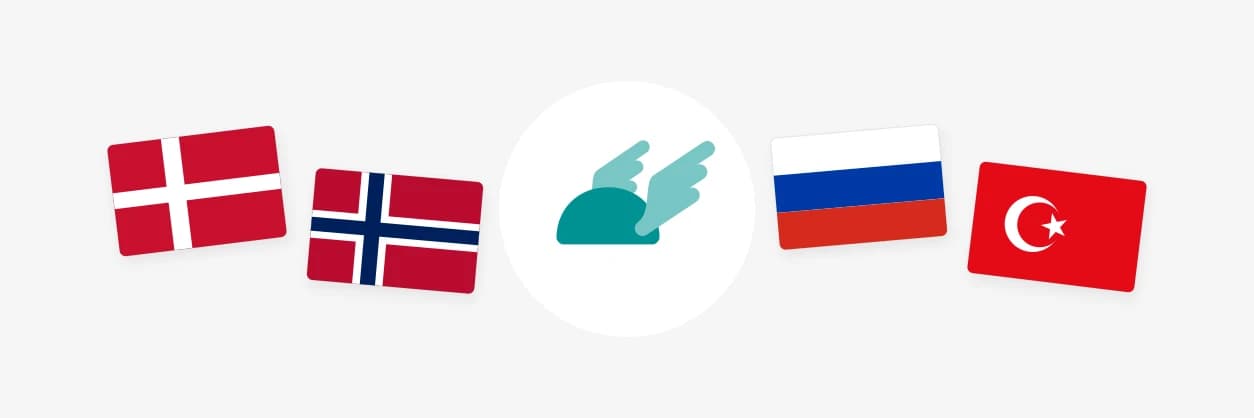
Your learners can now practice Danish, Norwegian, Russian and Turkish with Lingolix and get the same syllable-by-syllable feedback as in our other 17 languages. If you already use our API, adding them takes one line.
Feedback down to the syllable
For every word and syllable, Lingolix shows what the learner should have said, what they actually said, and whether the word is worth another try. An overall score combines accuracy and fluency. For free speaking practice, learners can simply talk: Lingolix transcribes what they said and scores that.
Danish
Few languages sound as different from how they are written as Danish. That is exactly where learners need a coach who tells them which sound in which syllable to work on.
Norwegian
Together with Danish and Swedish, you can now offer all three Scandinavian languages through one integration.
Russian
Russian stress moves around and changes how the vowels sound, and the spelling gives no hint. Lingolix takes care of that, so learners are judged on what native speakers actually say, not on the letters on the page.
Turkish
Turkish is written the way it is spoken, so the feedback points straight at the letter that needs work.
Clearly more accurate than Azure in Russian
We ran the four new languages through the same benchmark we use for all our languages, with recordings that contain deliberately mispronounced words, and tested Microsoft Azure's pronunciation assessment alongside. In Russian, Lingolix caught 69% of the mispronounced words, against 51% for Azure, and raised less than half as many false alarms (1.6% against 4.2% of correctly pronounced words). In Norwegian and Turkish, Lingolix also caught more errors than Azure. In Danish, the two are level. How the benchmark works is described in our open benchmark.
Adding them
Pass the new language code, da, nb, ru or tr, as language. Nothing else changes, and existing integrations keep working. Version 0.3.1 of our Python and TypeScript SDKs includes the new languages, and the API documentation describes every field of the response.
from lingolix import Lingolix

with Lingolix() as client:
    r = client.check("hej.m4a", sentence="Hej, jeg hedder Mads.", language="da")

print(f"Overall: {r.overall:.0%}")
for w in r.words:
    print("❌" if w.is_error else "✅", w.text, f"{w.accuracy:.0%}")
Try it
Record a sentence in any of our 21 languages in the demo on our home page, no account needed.
Get an API key